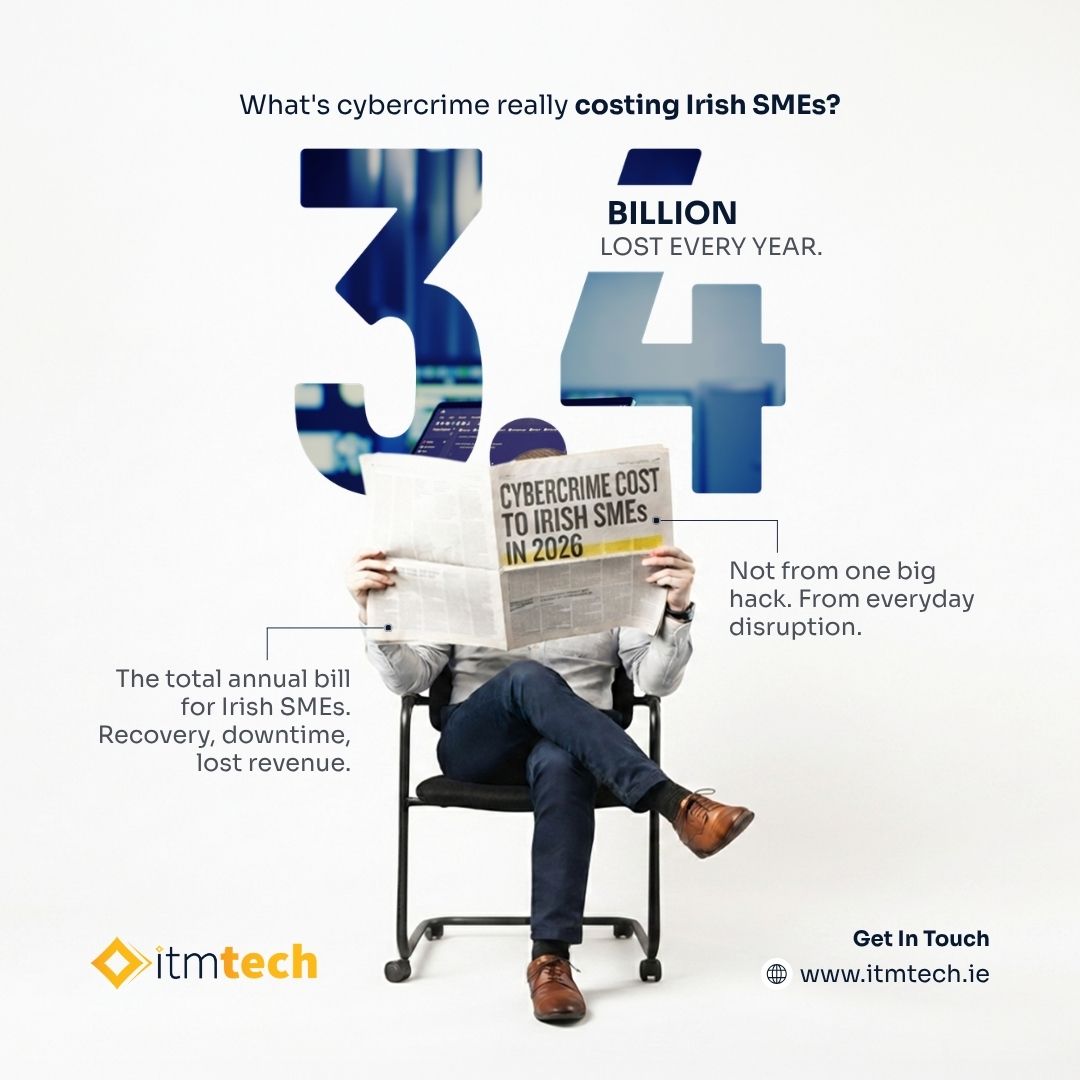
Irish businesses are facing a sharp rise in online scams this festive season, with text, email and invoice fraud now a weekly reality for many SMEs. Every team member in an Irish company plays a critical role in cyber security, especially in December when people are distracted and attackers know guards are down.
Common scams hitting Irish SMEs
Cybersecurity is not just about firewalls and antivirus; people and day‑to‑day habits are often the weakest link. Understanding how scammers operate helps Irish businesses spot red flags before money or data is lost.
- Phishing and smishing: Fake emails or text messages (often pretending to be banks, delivery firms, Revenue or suppliers) that try to steal passwords, card details or MFA codes.
- Invoice‑redirection fraud: Criminals compromise or spoof supplier email accounts and quietly change bank details on invoices, diverting legitimate payments to scam accounts.
- Ransomware and malware: Malicious attachments or downloads encrypt files or steal data and can bring a business to a standstill at its busiest time.
- Social engineering: Psychological manipulation where attackers exploit trust to gain access to confidential information.
Practical cyber security steps for every team member
A well‑informed team is the best defence against phishing and online scams targeting Irish businesses. These practical cyber security habits should be reinforced with staff on an ongoing basis throughout the year.
- Use strong, unique passwords and enable multi‑factor authentication (MFA) on email, finance systems, cloud tools and remote access.
- Keep software, operating systems and security tools fully updated to close known vulnerabilities exploited by ransomware and other malware.
- Back up critical business data regularly, test restores, and keep at least one backup isolated from your main network to limit ransomware damage.
- Verify before you click: Hover over links, check sender addresses carefully, and go directly to official websites instead of following links in unsolicited texts or emails.
- Treat USB sticks and downloads with caution: Never plug in unknown drives or install unapproved apps on work devices, as they can carry hidden malware.
How to spot and stop phishing and scam emails
Phishing emails aimed at Irish businesses often look professional, urgent and familiar, and they increasingly imitate real suppliers, banks or delivery firms. Training staff to pause and verify is one of the most effective cyber security controls you can put in place. Warning signs: Generic greetings, spelling mistakes, mismatched sender domains, urgent payment instructions, unexpected attachments, and requests for passwords or MFA codes.
- Always verify money movements: For any change of bank details, new payee, or unusual payment request, ring the supplier on a trusted number you already hold, not the number in the email.
- Don’t react to pressure: Scammers use phrases like “your account will be suspended” or “invoice overdue – pay now” to push instant action; legitimate partners will allow time for checks.
- Report quickly: Encourage staff to report suspicious emails or texts immediately to IT or your security partner instead of deleting them quietly, especially during office closures.
Building a security‑first culture in December and beyond
Cybersecurity is everyone’s responsibility, and your business is strongest when people, processes and technology work together. December is the ideal time to refresh cyber security awareness and remind teams that a single click can expose the whole organisation to financial and reputational damage.
- Run short awareness refreshers focused on festive scams, phishing, and invoice fraud targeting Irish businesses.
- Make it clear how and who to contact at ITM Tech or internally if staff spot a suspicious email, text or login alert, including during holiday cover periods.
- Review and tighten access to finance systems, online banking and admin accounts before the Christmas break, ensuring MFA is in place and shared logins are eliminated.
If your Irish business needs help strengthening cyber security, rolling out phishing‑resistant controls, or delivering practical staff awareness training, ITM Tech can provide local expertise tailored to SMEs.